
Tensions between the United States and Venezuela escalated sharply today after military strikes hit several locations in Venezuela, including the capital Caracas and nearby states. Venezuelan President Nicolás Maduro declared a state of emergency, accusing the U.S. of “military aggression” and mobilising defence forces amid explosions and reports of air activity over key sites.
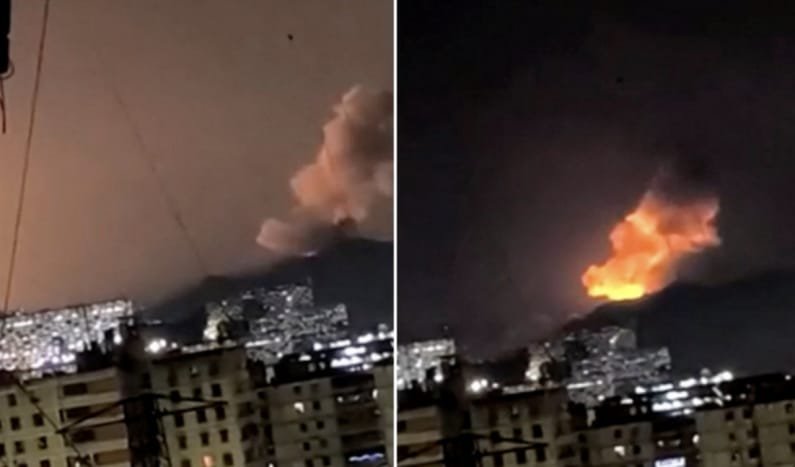
According to multiple reports, loud explosions were heard early Saturday across Caracas as aircraft activity was observed near military facilities. The attacks also extended to areas in the states of Miranda, Aragua and La Guaira, leaving parts of the city without power and smoke rising over several neighbourhoods. Venezuelan authorities described these actions as an unprovoked assault.
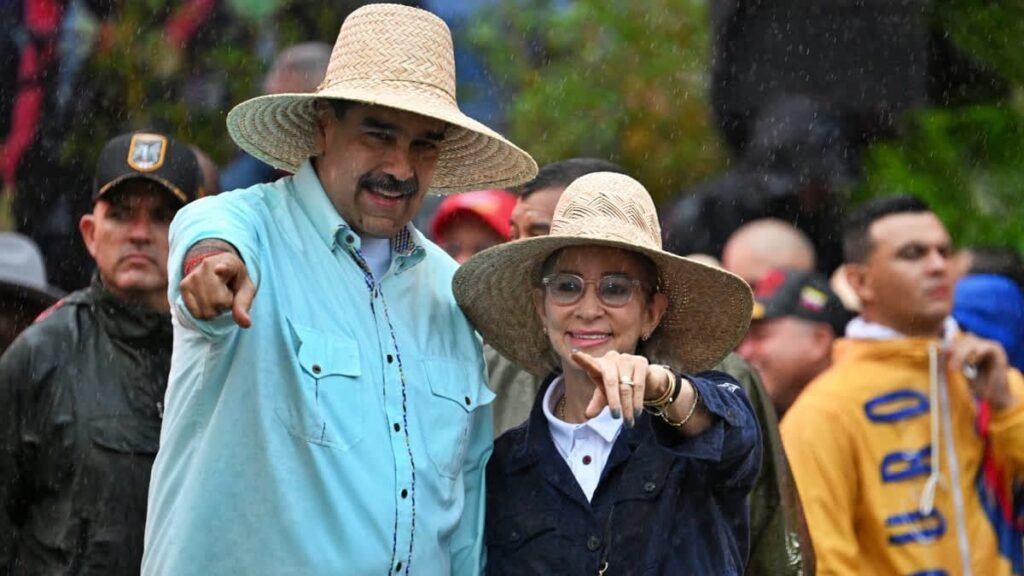
In a rare and dramatic statement, President Donald Trump said that the United States had conducted a “large-scale strike” and that Venezuelan President Maduro and his wife Cilia Flores had been captured and flown out of the country. The operation, described by Trump as successful, was said to involve U.S. special forces acting alongside U.S. law enforcement, although independent confirmation from official defence sources remains limited.
The Venezuelan government vehemently rejected these claims, condemning the strikes as a violation of the nation’s sovereignty and a breach of international law. Caracas called on citizens and loyalists across social and political sectors to mobilise against what it branded an “imperialist attack” on Venezuelan territory and people. Maduro’s statement asserted that national defence plans had been activated and that all necessary steps were underway to counter the threat.
The declaration of a state of emergency grants expanded powers to the government to manage security, restrict certain civil rights temporarily and enact military measures deemed necessary to safeguard the nation. It reflects the severity with which Venezuela views the unfolding events and heightens concerns across Latin America about wider regional instability.
International reaction to the crisis has been swift and varied. Governments in the region and beyond have expressed alarm, with calls for restraint and emergency diplomatic engagement. Venezuela’s allies condemned the reported U.S. action, while some nations urged an urgent United Nations Security Council meeting to address the escalation and its potential impact on peace and security.
As information continues to develop, world capitals and international organisations will be watching closely. This incident marks a dramatic moment in U.S.–Venezuela relations, and the full scope of its political, security and humanitarian consequences remains uncertain.